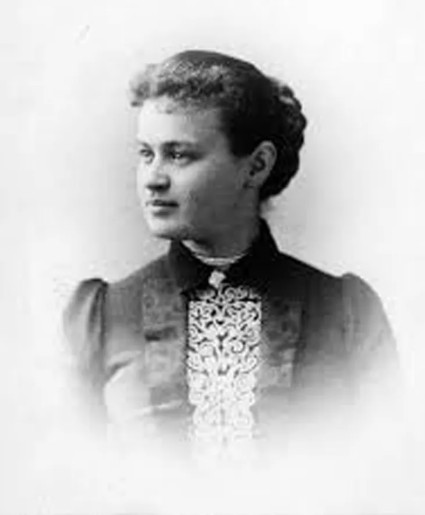
 Dr. Lucy Ellen Sewall (April 26, 1837 - February 13, 1890) was a trailblazing American physician, administrator, and essential figure in the 19th-century movement to
establish women in the medical profession.
Dr. Lucy Ellen Sewall (April 26, 1837 - February 13, 1890) was a trailblazing American physician, administrator, and essential figure in the 19th-century movement to
establish women in the medical profession.Queer Places:
151 Boylston St, Boston, MA 02116, USA
Mount Auburn Cemetery, Cambridge, Middlesex County, Massachusetts, USA
Dr. Lucy Ellen Sewall (April 26, 1837 - February 13, 1890) was a trailblazing American physician, administrator, and essential figure in the 19th-century movement to
establish women in the medical profession.
Born into a prominent Boston family devoted to abolition and social reform—her father was Samuel E. Sewall, a prominent lawyer and abolitionist—she was raised in an environment that heavily valued activism, independent thought, and civic responsibility.
She earned her M.D. from the New England Female Medical College in 1862 and pursued post-graduate medical studies in Europe (primarily in Paris and London), an opportunity rarely afforded to women at the time. Upon returning to Boston, she dedicated her life to clinical practice, medical education, and hospital administration.
Sewall played a foundational role alongside Dr. Marie Zakrzewska in establishing and running this institution, which served a dual purpose: providing low-cost, high-quality medical care to women and children, and offering clinical training to female physicians and nurses when mainstream hospitals refused them entry.
In 1869, Dr. Sewall succeeded Dr. Zakrzewska as the Resident Physician and Director of the New England Hospital. Under her leadership, the hospital expanded its training programs and established one of the first professional nursing schools in the United States.
She mentored scores of pioneering female doctors, including Dr. Sophia Jex-Blake (who went on to pioneer medical education for women in Great Britain) and Dr. Elizabeth Keller.
As historian Lillian Faderman highlights in To Believe in Women: What Lesbians Have Done for America, the birth of American female medicine was deeply intertwined with long-term, intimate, same-sex partnerships.
During the 19th and early 20th centuries, women who chose professional careers often faced a strict binary: marry a man and relinquish professional independence, or remain single. Many female physicians chose a third path—forming lifelong domestic and emotional partnerships with other women. Often referred to historically as "Boston marriages," these cohabitations provided mutual financial stability, professional collaboration, and emotional support.
Navigating medical school and establishing clinical credibility in a deeply patriarchal system required immense resilience. Partnerships between female physicians provided an indispensable support system.
Dr. Lucy Sewall & Dr. Elizabeth Keller shared a long-term domestic life while building the clinical footprint of the New England Hospital for Women and Children. Dr. Sewall purchased the building at 151 Boylston Street (Back Bay, Boston), which served as both her private residence and medical office. She notably shared rooms and practice at this address with fellow pioneer physician Dr. Susan Dimock.
The relationship between Dr. Lucy Ellen Sewall and Dr. Susan Dimock represents one of the most pivotal, personal, and tragic professional bonds in 19th-century American medicine.
Together, they helped build the institutional foundation for women in surgery and nursing in the United States.
When Susan Dimock—a brilliant young woman from North Carolina—arrived in Boston seeking a medical education, major American medical schools (including Harvard) flatly refused to admit women.
Dr. Lucy Sewall, already established as Resident Physician at the New England Hospital for Women and Children, took Dimock under her wing. Recognizing Dimock’s extraordinary talent, Sewall provided private instruction, clinical exposure at the hospital, and personal backing.
Realizing American institutions would not grant Dimock a medical degree, Sewall encouraged her to look to Europe. With the support of Sewall and the New England Hospital network, Dimock applied to the University of Zurich—one of the few institutions in the world granting full M.D.s to women.
Dimock graduated in 1871 with high honors, specializing in surgery and obstetrics.
Upon Dimock’s return to Boston in 1872, her bond with Sewall deepened into a close cohabitation and shared professional partnership:
Dr. Sewall purchased the home at 151 Boylston Street in Boston’s Back Bay. She invited Dimock to live with her and share the space as a combined home and private medical practice.
While Sewall served as attending physician and held administrative leadership, Dimock was appointed Resident Physician and Chief Surgeon at the New England Hospital for Women and Children.
Working closely together, they established the hospital’s training school for nurses—graduating Linda Richards (widely recognized as America's first professionally trained nurse) in 1873.
After three years of relentless clinical work, Dimock planned a trip to Europe in May 1875 for much-needed rest and medical observation.
On May 7, 1875, the steamship SS Schiller hit a fog bank and ran aground on the Isles of Scilly off the coast of England. Dr. Susan Dimock drowned at just 28 years old.
Devastated by the loss, Dr. Sewall arranged for Dimock's body to be recovered from England and brought back to Boston.
Sewall personally helped organize the funeral services, attended by Boston’s leading medical and reform figures. Dimock was buried in Forest Hills Cemetery.
The New England Hospital later renamed its primary campus building the Dimock Building in her memory (now the Dimock Center). Sewall continued her work at the hospital for years after, carrying on the institutional vision they had shared.
These partnerships were not merely incidental to these women's lives; they were the structural foundation that enabled them to succeed. By building independent households outside traditional heterosexual marriage, these doctors created space to direct their full energy toward medical innovation, public health reform, and institutional building.
References:
 To Believe In Women: What Lesbians Have Done For America - A History – A Compelling Landmark Account of 19th and 20th Century Rights by Lillian Faderman |
Other references:
Support this project
This website is a passion project researched, developed, and funded entirely by me. If you find the content valuable and would like to help support the ongoing research and hosting costs, any contribution is deeply appreciated.
Thank you for keeping this independent resource alive!
My books on Amazon: Elisa Rolle's books